The CAA has opened a consultation that will shape how drones share UK airspace for the next decade. It runs until 28 August 2026, and for anyone planning a Drone as First Responder programme, it is worth engaging with now rather than reading about the outcome later. Here is what the consultation covers, why it matters for DFR, and how UK forces should respond.
What the UTM consultation actually is
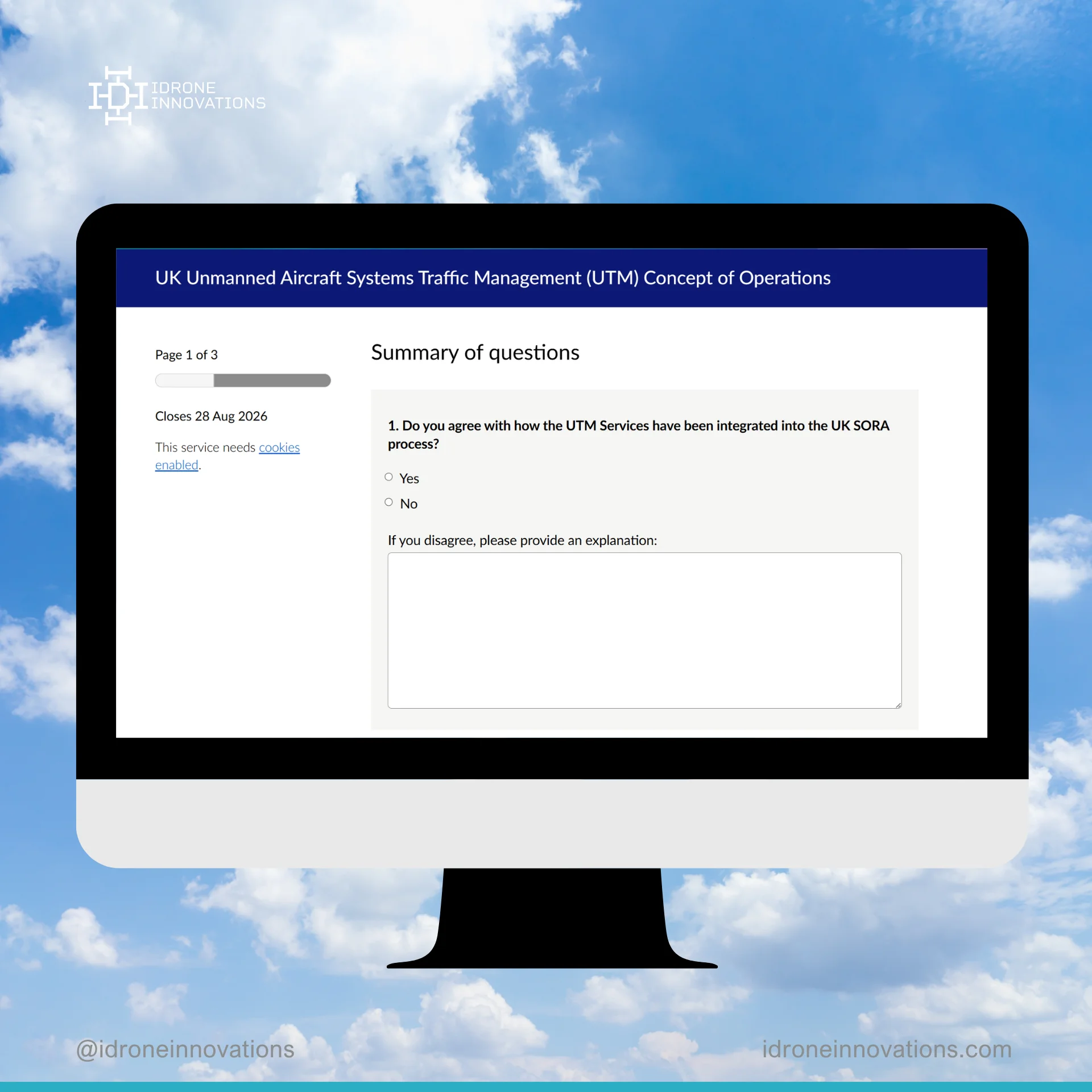
On 5 June 2026 the CAA opened a public consultation on Unmanned Aircraft Systems Traffic Management, or UTM. It is made up of three documents: a UTM Policy Concept, a Concept of Operations, and a proposed certification approach for UTM service providers. Together they set out how the regulator intends to manage drone traffic and integrate drones into the wider airspace as the UK moves towards routine Beyond Visual Line of Sight flight by 2027. The consultation closes on 28 August 2026, and you can read the documents and respond on the CAA consultation portal.
Why this matters for DFR
Today, DFR in the UK flies under a CAA Operational Authorisation with a BVLOS safety case, often leaning on mitigations such as observers or segregated areas. UTM is the framework that, once in place, allows routine BVLOS at scale. For DFR that is the difference between a programme that needs people positioned to keep the aircraft in sight, and one where a drone launches from a dock the moment a call lands and flies to the scene on its own. Routine BVLOS is the unlock, and UTM is the road to it. Our guide to BVLOS for DFR in the UK explains where the approval sits today.
What is being proposed, in plain terms
UTM is, in effect, traffic management for uncrewed aircraft: a way for many drones to operate safely in the same airspace, with certified service providers handling deconfliction and a clear set of rules operators design against. Rather than every operator solving airspace integration alone through a bespoke safety case, UTM moves towards a shared, repeatable system. The consultation is the CAA asking industry whether it has the policy, the operating concept and the certification approach right. That is a genuine invitation to influence the rules, not a finished decision.
What it means if you are planning DFR now
Do not wait for 2027. There are two reasons. First, the BVLOS safety case you build today is the foundation you carry into a UTM world, so starting it now is time well spent, not wasted. Second, the consultation is open, and the operators who respond are the ones who help shape the rules they will end up flying under. The forces that engage now will be the ones ready to scale the day routine BVLOS arrives. If you are at the start of that journey, our step-by-step guide to starting a DFR programme sets out the order to do things in.
How to respond to the consultation
Read the three documents on the CAA's portal and submit a response before 28 August 2026. If you run or plan to run DFR, the most useful thing you can do is comment from an operational point of view: what a control room actually needs, what a realistic dock-based deployment looks like, and where the proposed approach would help or hinder a live emergency response. Regulators write better rules when operators tell them how the work really happens.
How IDI can help
This is where a partner who lives in both the regulation and the operations earns its keep. IDI is a UK company that designs and builds its drones, docking stations and software end to end, and we work with forces from first scoping through to live DFR. Our consultancy helps you:
Make sense of the UTM consultation and what it means for your specific programme.
Shape and submit a response that reflects how DFR actually runs in a control room.
Build a BVLOS safety case and operating model that stands up today and slots into the UTM framework as it lands.
Choose technology that is built for autonomous, dock-based operation rather than retrofitted to it.
We would rather help you build something that is ready for routine BVLOS than watch you start again when the rules change. For an overview of our approach, see the DFR solution page.
Common pitfalls
Waiting for the consultation to conclude before starting your BVLOS work.
Treating UTM as someone else's problem rather than something to influence now.
Building a safety case and operating model that only works under today's mitigations.
Choosing kit that cannot operate the way routine BVLOS will expect.
FAQs
When does the consultation close?
28 August 2026. It opened on 5 June 2026, so there is a clear window to read the documents and respond.
What is UTM?
Unmanned Aircraft Systems Traffic Management: the framework for managing drone traffic so many aircraft can operate safely in shared airspace. It is a key step towards routine BVLOS.
Does this mean we can fly routine BVLOS now?
Not yet. The CAA's roadmap targets routine BVLOS by 2027. Until then DFR flies under an Operational Authorisation and a BVLOS safety case.
Should we wait for the new framework before starting DFR?
No. The regulatory and site work take the longest, and the safety case you build now carries forward. Starting early is how you are ready to scale later.
Can IDI help us respond?
Yes. We help forces interpret the consultation, shape a response, and build BVLOS-ready DFR programmes. Talk to us.
Check out the CAA Call for Reponse here.